|
|
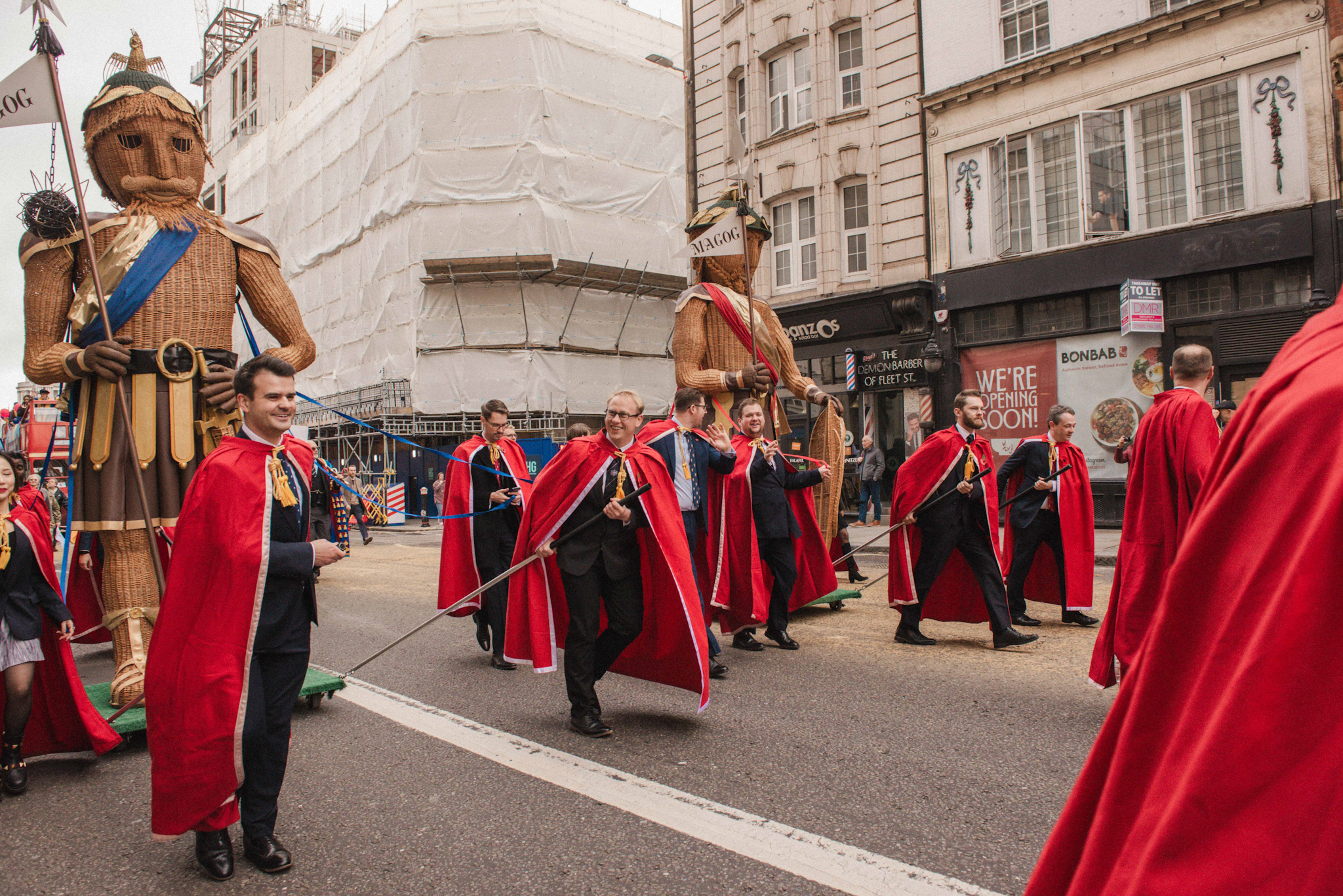
WHISKY TASTING WITH GUILD OF FREEMEN 21st November 2007 Whilst the rest of the country wallowed in gloom from defeat at the hands of Croatia, the SYF and Guild of Freemen enjoyed both an educational and more than a little enjoyable evening at Tallow Chandler's Hall. Roger Mallindine, Master of Whisky at Diageo, was our guide for the evening, taking us through a choice of 8 singe malts distilled in Scotland's renowned Speyside area and the highlands. With 40 years experience in the industry behind him, Roger provided a fascinating insight into the world of whisky we had temptingly set before us and added many an amusing anecdote into the history and practice of this ancient trade. The single malt many would say is the King of whiskies, but only has 10% of the sales in the UK compared to the main brand blended whiskies most of us are familiar with which make up the other 90%. We learnt that age isn't everything, because of the difference in climate, a 5 year matured lowland malt can be just as good as a 10 year old highland one. Another trick was to "nudge" the whisky with a drop of water, far from watering it down, as is commonly misunderstood, this in fact opens up the full flavour of the drink to enjoy. After what was a very liquid evening, we were glad to see the arrival of a light supper to steady us before the journey home. Once again we thank the Guild for letting us take part in what was has become a very successful part of our calendar of events. TOUR OF VINTNERS' HALL 17th October 2007 On 17 October we were given a rare opportunity to visit the ancient hall of The Vintners' Company, one of the Twelve Great Livery Companies. The hall on Upper Thames Street is situated on land the Company has owned since 1446. Although most of the original hall was burnt down in the Great Fire, the current magnificent building dates as far back as 1671. Amongst many lavishly decorated panelled rooms, the Court Room has the accolade of being the oldest room in single continuous use in London. It was the place where the Magna Carter was signed by the City and from where, after the Civil War, General Monk sent The Master of the Company to petition for Charles II return from exile in Holland. The room is supposedly haunted and rather spookily the lights flickered as the Beadle recounted the story to us! The Vintners were charged with regulating the import and sale of wine in the City since 1364 and although this practice has now lapsed, they still own one of the finest wine cellars in the country which we had the opportunity to visit, although were not able to try the merchandise! One of their other interesting privileges is the Right of Swans granted to them by Henry VIII in lieu of a debt he never repaid. This means that every year, along with the Dyers' Company, they take part in the ancient practice of "Swan Upping" on the River Thames where they check on their numbers and well being. We visited the room dedicated to the practice and learnt that although they still hold an annual Swan Feast, these days duck or goose is normally on the menu. Afterwards we retired to a local pub to discuss what all agreed had been a very interesting evening. THE LORD MAYORS' SHOW 10th November 2007 Once again the SYF had the great privilege to accompany the giant guardians of The City, Gog and Magog along in the Lord Mayors’ Show and over 60 SYF jacket glad members and their families did. We were also joined this year by The Worshipful Company of Basketmakers as well as children from Manford Primary School in Chigwell, Essex and The Royal Russell School in Sussex.
As has been the way in recent years, the weather was dry but chilly, making it an ideal day for a brisk walk through the city. The day could be summed up by one of the school children who accompanied us (not the one who thought the SYF Chairman was the SYF German!); “This is the best day of my life!” THE CORK CLUB AUTUMN LUNCHEONFriday 12th October 2007The Cork Club Autumn Luncheon took place on Friday 12th October 2007 in The Sefton Hotel’s elegant Gallery Room, Douglas. The guests of honour were the Lieutenant Governor of the Isle of Man His Excellency, Vice Admiral Sir Paul Haddacks KCB, Lady Haddacks and Geoff Corkish MBE, MHK. The main focus of the event was to promote the Isle of Man to visiting Freemen of the City of London and to strengthen the links and foster the commercial connections between the two locations. Quinn Kneale sponsored the champagne reception , Cavendish Trust and Hamblin sponsored the meal and tour of the Historic Gaiety Theatre. Among the members and guests were Freemen of the City of London and Liverymen from London Livery Companies all of whom enjoyed meeting the special guests of honour. Locally resident Liverymen included Spectaclemakers, Scriveners, Apothecaries, Stationers and Newspaper Makers, Chartered Accountants and a member of the Guild of Air Pilots and Navigators. Promotional support for the event highlighting local products and services were generously donated by: Isle of Man Department of Tourism, Isle of Man Creameries, Heron and Brearley, Dandara and Blackrock. The Cork Club consists of Past-Chairman of The Society of Young Freemen of The City of London who are active in the City Livery company milieu. With many having personally recorded distinguished and senior careers in the business world, they provide a highly effective communications link to an influential and energetic cross-section of City opinion. Cork Club members and their guests meet at least twice a year to mark the formative role played in the affairs of the Society by the late Sir Roger Cork who was Lord Mayor of London in 1996. It was Sir Roger's founding inspiration that initiated the Society's endeavours to foster relations beyond the City's traditional boundaries of "the square mile". These gatherings continue to support that intent, and aside from providing a congenial opportunity to pursue the agenda items of current and mutual interest, they are designed with the aim of extending industry and regional connections.
The aims of the Cork Club lunch at the Sefton were to:- Brief the centres of influence represented by the Club's membership on the benefits to the corporate and personal sectors by the forward looking and flexible commercial frameworks designed by the Isle of Man legislature. Promote a sustainable interest in the IoM, so far "a well kept secret". Promote the quality of the IoM jurisdiction, second to none "offshore". Promote the Isle of Man Liaison Office now located in the City of London and the "Freedom to Flourish" initiative. Promote the opportunity to attract strategic talent and long-term key personnel to the IoM. Promote the opportunity for skills recruitment companies to sponsor the event in various ways. Promote HM's representative on the Island as well as the officers of the legislature and regulatory environment in whose hands the Island's future rests. Promote and reinforce an important connection between the City and the Island by suitable postings on City of London Livery Company websites. Consolidate the considerable interest in visiting the Island that has already been expressed by Cork Club members, their spouses and their potential guests. To conclude the event the Cork Club and their guests were escorted on a fascinating tour of the historic Gaiety Theatre by Mervin Stokes VISIT TO KEATS' HOUSE 20th September 2007 On a Summer evening in September we ventured out of the City to the leafy suburb of Hampstead where on the edge of the Heath amid the splendour of wealthy houses, lies the home of one of our greatest poets, John Keats.
The house, which was formerly two homes, is set in beautiful grounds and now owned and run by the Corporation of London. Keats moved their from Moorgate in the early 19th century and rented rooms from his friend Charles Armitage Brown. The house inspired some of his most memorable poetry including 'Ode to a Nightingale'. It is also where he met and fell in love with Fanny Brawne, literally the girl next door, and we saw the tender correspondence he exchanged with her. Amongst some of the other artefacts were Keats' writing set and his haunting death mask. He died at the foot of The Spanish Steps in Rome, where he had been sent to recover from tuberculosis, a disease that had struck many in his family. Tragically he was aged just 25 and we learnt that just before contracting the disease he and his friend had been on a 650 mile walking tour of Scotland in Winter. Perhaps the two were connected! We then went on for a light supper at a local gastro pub which was enjoyed by all. SYF AGM 10th JULY (2007) The 2007 AGM took place at Guildhall on Tuesday 10th July. New Chairman Toby Locke was welcomed by all as were several new committee members. Following the meeting refreshments were provided by the new Chairman.
THE BRITISH LONDON 10K RUN (2007) For the second year in succession the SYF organised a group of runners to take part in the British London 10km run. Last year 49 runners representing different livery companies took part raising over £30 000 for The Lord Mayor’s Charity, Trealors. This year 70 runners took part to raise money for this years Lord Mayor’s Charity which includes VSO. Conditions on 1st July were ideally suited to running, with an overcast day with the sun breaking out after the run finished. With 20 000 runners taking part and large crowds cheering the runners on it was an enjoyable, if slightly painful, experience. The event was made more special as the Lord Mayor himself was situated on the embankment cheering us on. He had a particular interest as his two sons were taking part for us.
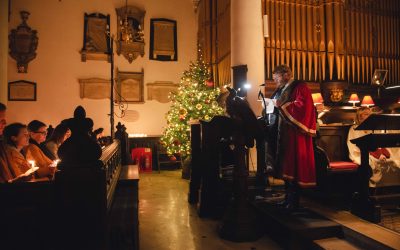
Next year we will be running (excuse the pun) the event again and will be having 107 runners, one for each of the Livery Companies. The event will be raising money for the “Sheriffs and Recorders Fund" and is on the Sunday 6th July 2008. If you would like to run or know somebody who would, please email the SYF co-ordinators Steve Bowsher at stevebowsher@hotmail.com or Jason McCreanney at mccreanney@btinternet.com SYF ANNUAL DINNER AT CUTLERS HALL (2007) The 24th May 2007 saw the SYF hold its biggest and most prestigious event of the year at Cutlers Hall. This unique hall in Warwick Lane was built in 1888 and has a finely carved terracotta frieze on the outside. Members and guests gathered downstairs for welcome drinks where a potential new member was unveiled in the form of Emma Scriven, the two week old daughter of the chairman and his wife. Following this, the dinner was held in the magnificent Livery Hall upstairs where fine food and wine was enjoyed by all. TOUR OF THE OLD OPERATING THEATRE AT ST THOMAS'S HOSPITAL The tour of the Old Operating Theatre at St Thomas’s Hospital was by far one of the best events I have ever been to with the SYF. This place is a hidden gem, found at the top of a rickety spiral staircase in the barn-like roof space of an old Church. There is a museum exhibiting the herbs, potions and implements that were used during and after operations, as well as several preserved body parts, including some kidneys and a brain. There were snippets of information all around the room explaining how things were done in those days and why, which made for some fascinating, if rather gruesome, reading. In the room next door the original Operating Theatre still remains. It was purely Charitable and therefore for those people who could not afford to pay for any operations. As a result, it was also used to teach medical students who would stand around the operating table in stands reminiscent of an amphitheatre. The main activity was amputations and we were given a mock demonstration of how such operations were carried out. Once operated on, the patient would either go through the door which led back to the ward (where they often spent weeks recovering) or, if they had not been so lucky, would be taken to the church downstairs for burial. At the time, there was plenty of sawdust on the floor but blood still seeped down from the Theatre to the church below. Apparently, church-goers thought that this was simply a sign from God. After the tour, we quickly recovered from the gore and went to enjoy a delicious meal at a local restaurant. TOUR OF VINOPOLIS The notes I used for the write up of this tour were meant to be used to give an insight into the wine we tasted on the tour and the events that took place. However as the evening progressed the notes became less legible and the memory of the events more hazy. Our party met at Vinoplolis in Southwark on 17th March at 6:30. We were given a brief lesson in how to taste wine in the correct way and then we proceeded to taste six quality wines from around the world, all of which tasted very different. First up was a South African Sauvignon Blanc and then an oak smoked Chardonnay from the Burgundy region of France. The third white wine was a Riesling from the Barossa Valley in Australia. My tasting notes said it tasted of limes, which is more complementary than the Chardonnay, which I thought tasted of mushrooms. Then it was onto the red wine. Firstly there was a Pinot Noir from New Zealand then a Chilean Carmenere. Finally, a strong American red make from Italian Zinfandel grapes made in America. The tour was rounded off by a gin cocktail in the gin bar. It was then decided that we needed to find somewhere to eat to help soak up the alcohol. Fortunately our Chairman is a resident of Southwark and took us to a recently opened Lebanese restaurant in Borough High Street, that proved to be good value and have extremely tasty food. To help the food go down, several bottles of Lebanese wine were ordered, adding to our global wine tasting exploits. LORD MAYOR'S CAROL SINGING (2006) On the evening of 19 December we met at the Mansion House for the honour of singing carols to the Lord Mayor, Alderman John Stuttard. This is a most enjoyable tradition which the Society has kept for many years. After an impromptu warm up, we gathered round the Christmas tree in the reception hall and sang a selection of everyone’s favourite carols. The Lord Mayor and the Sheriffs joined in with gusto and then kindly invited us to partake of some festive cheer in the form of delicious mulled wine and warm mince pies. We finished with a parting rally of “We wish you a Merry Christmas” before making our way into the cold December night to continue our singing at a selection of local hostelries. Armed with collecting tins we sang carols and collected money for the worthy cause of the VSO, one of the Lord Mayor’s chosen charities this year. The reception in the pubs was warm, if sometimes a little rowdy, with plenty of people choosing to join in and help with the singing. Imbibed with the Christmas spirit we then parted after having collected the grand sum of £92. CAROL SERVICE WITH THE GUILD OF FREEMEN On December 7th we were delighted to be invited once again to join the Guild of Freemen for their Carol Service in the beautiful setting of St Martin-Within-Ludgate. In case you are interested in a little bit of history, St Martin is a Patron Saint of travelers and churches dedicated to those Saints often stand within the city gates. The Roman Wall and Ludgate stood immediately to the west of the church and the monastery was built in 1278. Back to the service, it was very uplifting and the church was packed to the rafters. The choir of the City of London Freemen’s School guided us very adeptly through the different carols, and the Lessons were read by several eminent people, including our very own Chairman, Rob Scriven! The service was followed by a lovely finger buffet, and a particular mention must go to those fantastic mince pies! All in all, it was a lovely evening and definitely helped everyone to get into the festive spirit! LORD MAYOR'S SHOW (2006) On Saturday 11 November we gathered on London Wall to help welcome in the new Lord Mayor Alderman John Stuttard. The Lord Mayor’s Show is one of the highest profile and best attended event in the Society’s calendar and this year was no exception. In fact this was a very special occasion for the Society as it was the first year that we were to help pull the two new 15 foot wicker Gog and Magog figures which had just been made by the Worshipful Company of Basketmakers.
Together with the Basketmakers, we were joined by children from Manford Primary School, meaning that, in all, the sea of red SYF jackets numbered over 50 strong.
Gog and Magog are the mythical giants who are the ancient guardians of the City of London. Unlike the inflatable figures which we had pulled for so many years, these new creations did not require a motor to be pulled along with them and they were slightly shorter which made negotiating the City’s low bridges and the BBC’s camera gantries much easier, to the relief of all involved. The giants got a warm reception with cheers from the crowd. As we passed, I could hear parents trying to explain what these enormous effigies were,
I even heard one say “it’s the Wicker Man”! We are most grateful to the Basketmakers for all the incredible hard work they put in to create Gog and Magog to such a high standard – all of it voluntary – and for giving us the honour of helping to pull them on this special day. TOUR OF SOUTHWARK CATHEDRAL
Although there has been a church on the site of the Cathedral for over 1000 years, the foundation stone to the current Cathedral was only laid in 1890 with the church only becoming a Cathedral in 1905. The majority of the building is new, but parts of the original church still stand and foundations of previous churches and the priory that stood on the site can still be seen. The Cathedral only has a small parish, but serves a large diocese. This stretches as far as Richmond in the west and as far south as parts of Surrey and even Crawley. As we toured the building we were able to see how the modern building had been made to fit in with the original. There were examples of large wooden bosses at the back of the nave that had originally been in the roof and instead of a stone floor there was a more modern wooden floor. In the north aisle of the Cathedral is the tomb of John Gower, the first English poet and a friend of Chaucer’s. The Cathedral had further buildings added to in as part of its Millennium appeal and a modern, yet sympathetically designed building now stand on the north side, connected to the Cathedral by a covered walkway. This new building serves as a conference facility, restaurant and shop among others. After our enlightening and enjoyable tour we were able to retire to a nearby restaurant to relax and reflect on our enjoyable tour. A COMEDY OF ERRORS On 16 August 2006 the Society made a trip to Shakespeare’s Globe Theatre on Bankside to see “A Comedy of Errors”. The open air theatre is a faithful recreation of the original 1599 building in which Shakespeare first put on many of his most famous plays. We enjoyed a pre-theatre meal in one of the Globe’s two restaurants before making our way into the central pit of this magnificent theatre to experience the play whilst standing, Elizabethan style. The play is one of Shakespeare’s liveliest comedies, a farcical tale of mistaken identity amongst two pairs of twins set in Roman times. The way the actors hammed it up and added slapstick touches fitted the mood of the crowd just right, who responded with raucous laughter. At one point in fact there was even some jovial heckling! Although some had been wary of standing, the light-hearted experience and belly laughs meant the performance passed all too quickly, without any uncomfortable shuffling of feet. We then retired to a local hostelry next to Borough Market to partake of a few jars of ale and draw a thoroughly enjoyable balmy Summer night to a close. CITY WALK - BOROUGH & BANKSIDE On a balmy summers evening we were treated to a guided walk looking at the history of the area by a guide from the Old Operating Theatre and Museum of Guy’s Hospital. The evening started with a brief history of the medical links of the area, with two of the great London hospital’s St Thomas’ and Guy’s being originally located on opposite sides of the St Thomas’ Street after which the former hospital is named. Guy’s was named after Thomas Guy, the original founder. We will be taking a tour of the Old Operating Theatre itself in January. We then proceeded on to Southwark Cathedral, or St Saviours Southwark as it was known until it was made a Cathedral in 1905. We were told some interesting anecdotes of the history of the Cathedral and the area around it, including the now famous Borough Market. We saw some of the original foundation stone’s of the third London bridge and the remains of St Mary Ovary Dock where the replica of Sir Francis Drake’s famous ship the Golden Hind in which he circumnavigated the globe is now moored. We were given some of the history of the wharves and warehouses that line the streets fronting the river and shown the remains of the Palace of The Bishops of Winchester. The Bishops of Winchester were in the early middle ages the owners of large parts of Southwark and some of the most powerful and richest men in the country. The women of ill repute that used to ply their trade in the area, not being allowed in The City, were under the protection of the Bishops and often known as Winchester Geese. We were led on up river past the Clink Prison, the origin of the slang term for a prison, to the Anchor Inn It is now a popular riverside pub although at one time it was also the brewery that in more recent years would come to be known as Courage Brewery. The Anchor was a favourite haunt of Samuel Pepys who knew the owners at the time, he mentions it several times in his diary and it is where he sought refuge from the Great Fire. It was a favourite drinking and eating spot of many famous people throughout time, including Dr Samuel Johnson the famous lexicographer. Returning towards Borough High Street we were shown the Hop Exchange, literally an exchange (like the stock exchange) for Hops, underling the importance of the brewing trade to the area. We were told tales of the many Inns that used to line Borough Street, where travellers from the South would rest overnight before entering the City to do business the next day. We went to The George Inn, one of the oldest pubs in the country, an original Galleried Inn and courtyard dating from 1676. It was one of many in the area including the famous Tabard Inn where Chaucer starts the Canterbury Tales, most have however vanished under modern buildings but the George was saved and is now owned by the National Trust. After all the talk of refreshment and owing to the warm temperature on that July evening we decided it was about time to refresh ourselves and so we ended our tour with some liquid libation before retiring for a little light supper. AGM 2006 - ST MARTIN WITHIN LUDGATE
Immediate Past Chairman, Jason McCreanney with new Chairman Rob Scriven The AGM 2006 was held in the lovely Wren church of St Martin Within Ludgate which is situated on Ludgate Hill only a few hundred yards from Wren’s masterpiece of St Pauls. The Committee and Chairman were elected in due form by the members present, the new Chairman then gave a short talk, thanking the members for electing him and giving a brief history of the church with which he has several connections. The present Church is believed to be the 3rd on the site. The first was according to legend built by King Cadwaladar around 1300 years ago. Cadwaladar was King of Gwynedd, a heroic figure and resistance fighter against the Saxon invaders Britain. Interestingly his Red Dragon standard was adopted by Henry Tudor who claimed descent from him and is now part of the flag of Wales. According to some sources Cadwaladar himself is buried in the Crypt. This seems unlikely though as he is recorded to have died of a plague in Wales in 682 and the first reference to a church on this site is from 1174. The 2nd church was a medieval church that was completed in 1437 and was destroyed by the Great Fire of London in 1666. The present Church was built by Sir Christopher Wren between 1677-84. It is a very clever design, with the wooden entrance hallway and screen designed to reduce the intrusion of the busy road outside, (Nice to know things haven’t changed!) The tall black spire was designed by Wren as a visual foil to the mass of the dome of St Pauls. You will no doubt have noticed much of the original woodwork around the church, the organ gallery, screens and alter piece are all believed to be of 17th century origin and have fantastic carvings some of which are attributed to Grenlin Gibbons. It is the Chapel of several Livery Companies and other organisations and is very popular for lunchtime recitals and services. To round off the evening a hot buffet and a few glasses of wine were enjoyed before heading home. The special thanks of the society must go to the Church for making us so welcome and to the Chairman’s wife for a delicious meal. BRITISH LONDON 10K RACE (2006} On Sunday 2nd July the SYF was proud to have close to 40 runners in the British London 10k race. With each runner representing a Livery Company, this was perhaps the biggest charitable event the society has ever organised. In blistering heat the runners managed to raise a huge sum of money for the Lord Mayors Charity of Treloars Trust. With about three quarters of the money raised having been sent in by September the total stood at a magnificent £23 000. Something that all the runners and the SYF should be very proud of.
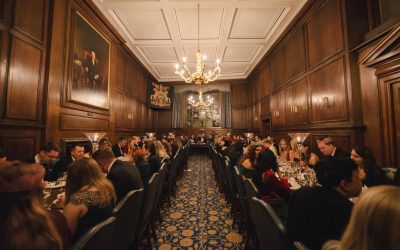
SYF runners before their valiant efforts in the British London 10k Race SYF ANNUAL DINNER AT WATERMENS HALL(2006) Friday 26th May saw the highlight in the Society of Young Freemen’s calendar with the Annual Dinner. This year the event took place in the wonderful and beautifully decorated Watermens Hall in the company of The Rt Hon. The Lord Mayor Alderman David Brewer who is also Patron and President of the Society. The Hall although small compared with some, was perfect for the dinner which was enjoyed by a large number of members and their guests and had been sold out months in advance.
Decorating some of the walls was memorabilia from the past connected with the trade on the Watermen, some of which would be explained later by the speech of our guest speaker, Mr Crouch. After welcome drinks we proceeded to the main hall for dinner where we waited for The Lord Mayor and principle guests to enter with this year's Chairman, Jason McCreanney. As is tradition in the hall they were greeted in silence until the assembled guests were forced to laugh at a tiptoeing Lord Mayor. After dinner we were entertained by the Lord Mayor’s speech and that of our Chairman, who detailed some of the things that had happened in the course of the last year.
Our guest speaker, Mr Crouch who is a member of the Waterman’s Company then enlightened us on some of the work of Watermen in the past. As a former Barge Master to the Queen we was speaking with some authority. We found out the origins of the annual Doggett’s Coat and Badge race. It was started in 1716 after Thomas Doggett after the only person who would take him up the Thames was an apprentice Waterman. For his effort he was rewarded with a new coat and badge. Today the winner of the race, who must be an apprentice Waterman, is presented with a new Coat and Badge; an example of which was displayed in the room. After an hugely enjoyable dinner members and their guests were able to return home in good spirits. BEATING THE BOUNDS Wednesday 22nd June saw members of the Society of Young Freeman join up with members of Vintry and Dowgate Ward Club for the ancient ceremony of beating the bounds. This is a tradition that dates back over 1000 years and is done to mark out the boundary of the wards. Having met at Mansion House underground station we split into two groups. Vintry and Dowgate wards are adjacent to each other, south of Cannon Street and stretching, quite literally, down into the Thames. The splitting into two groups became clear at this point as one group had the task of beating the boundary in the Thames while the other had the task of beating the boundaries on land. Being a hot balmy evening one option seemed more appealing than another to some members, especially as the Societies new chairman had been told that there was a good chance he would end up in the water, something not to be missed. Several pieces of good news were shared with us. Firstly, it use to be a tradition to have a boy with you to beat on the boundary, fortunately this was no longer the case as sticks are now beaten on the ground. The second piece of good news was that we didn’t have to beat the entire length of the boundary, but only strategic parts. We were also told that when beating the boundary we had to say the following phrase three times, ‘Cursed be he who removeth his neighbours landmark.’ Trying to remember this, the groups set off.
This Year's Chairman, Jason McCreanney The group going to beat the boundary in the Thames headed out of the wards, beating the boundary once on route to Blackfriars pier where they boarded a Port Heath Authority boat. The boat cruised up towards Tower Bridge before turning and pausing in the middle of the River inline with Swan Lane, which marked the easterly boundary of Dowgate Ward. Sticks were then lowered into the water and beaten whilst saying the required phrase. The boat stopped further up the river to repeat the process before heading back to the pier. This was certainly a pleasant way to spend a summers evening and the Chairman agreed, when he was back on land having not been cast into the water. The groups then headed to Ye Olde Watling in Watling Street for supper. This is a very ancient inn originally built by Sir Christopher Wren as a hostel for his workers in the shadow of St Paul’s Cathedral. We were superbly looked after and fed whilst we shared tales of our beating. The Society of Young Freemen would like to thank the Chairman Michael Stewart and the members of Vintry and Dowgate Ward Clubs for making this unique experience possible.
A TALK ON St MARGARET
PATTENS CHURCH IN EASTCHEAP This year's AGM of the society was held at St Margaret Pattens Church in Eastcheap and following the meeting we were given a short talk on the history of this wonderful Wren church by Mr Derek Oliver, a keen supporter of the society and one of the churches wardens. A church has stood on the site for some nine hundred years and was originally dedicated to St Margaret. The 4th church built on the site was destroyed by the Great Fire of London and a new one was commissioned to be built by Sir Christopher Wren. It was rebuilt in 1684 and took three years at a cost of £5000. It is said that the church was one of Wren’s favourites. During WWII, the church was partly destroyed by a bomb and was rebuilt in the 1950’s to its current state. The word Pattens was also added to distinguish the church from other churches with the same name. Pattens were made in this part of the city, so the name was deemed appropriate. Pattens were basically wooden equivalents of modern day galoshes that fitted over shoes to protect them. From the outside, the church can be hard to spot due to the modern day offices around it. However it does have the third highest spire in the city, which is made from lead. There was originally a cross on the top, very similar to the one that Wren put on St Paul’s Cathedral, but this has been removed as it wasn’t safe. It is now displayed inside the church. Inside the church there are many wonderful things to see. Wren has very cleverly allowed light into the church to enhance the spaciousness and to keep it bright. Above the entrance there is a large coat of arms of James II. Either side of this there are two raised boxed pews which look very magnificent. Above the entrance is also a balcony which holds the wonderful organ. Two windows bear the large coats of arms from two city livery companies which were added in the year 2000. One from the Worshipful Company of Basketmakers, and one from the Worshipful Company of Pattenmakers. The church is a guild church and both these livery companies provide a guild warden. The church now caters for the workers of this part of the city, as there are no residents for the congregation, and as such a regular Eucharist service takes place every Thursday lunchtime. There is also a voluntary choir. After the informed talk from Derek Oliver we were able to enjoy the church as we welcomed our new Chairman, Jason McCreanney, with refreshments he had kindly provided. |
|||||||||||||||||||||||||||||||||||||||||||||